A little lake.
Neighbouring decisions.
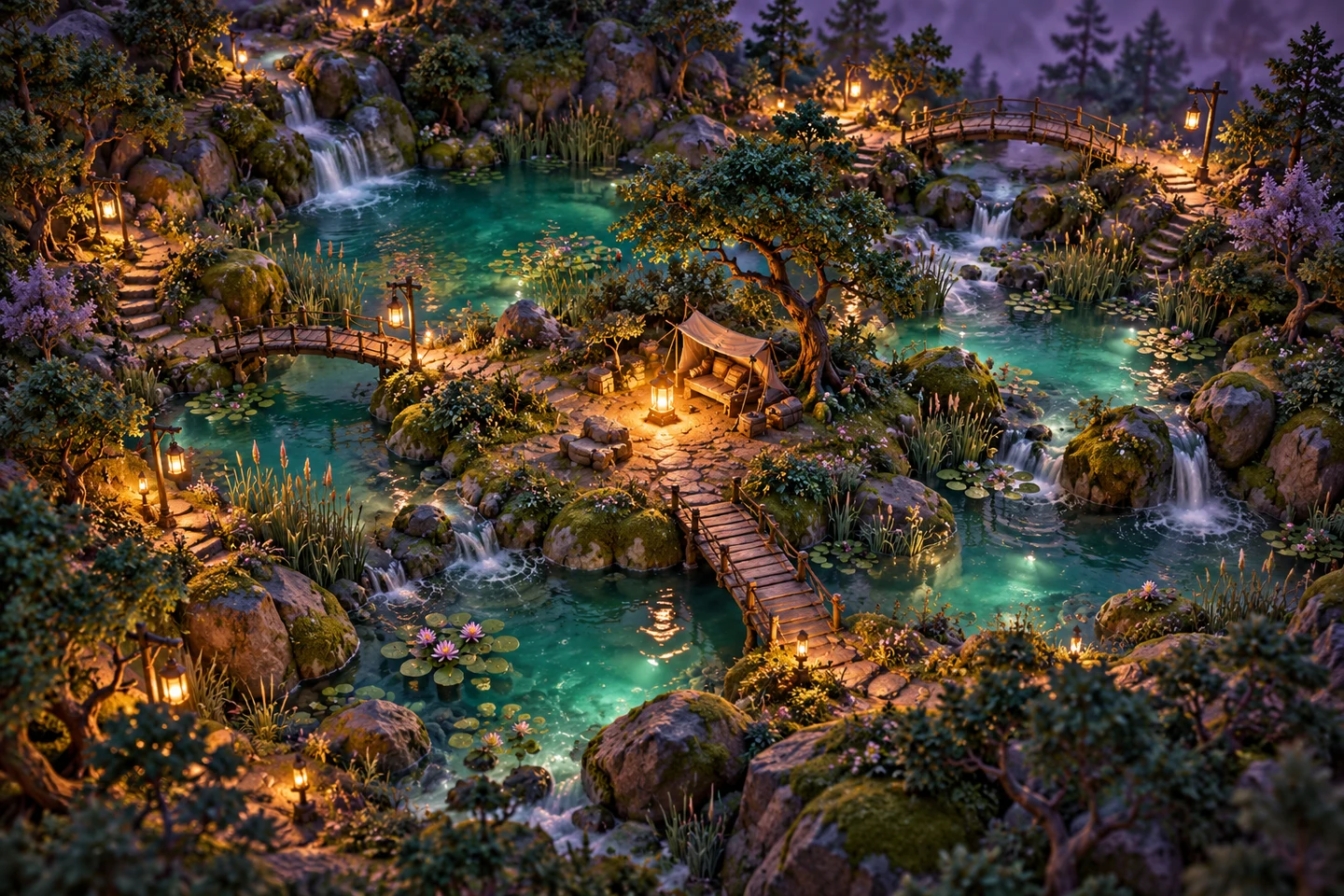
The idea begins at the centre
A neutral camp anchors the board. Channels value proximity to it, pools carry a simple base score and reeds depend on nearby pools. The interesting question is how one placement changes the possibilities around it.

Shared space, separate ownership
The full game gives two players a compact set of tiles. Either player’s pool can help a reed, but each player scores their own pieces. That creates a gentle tension between building a useful neighbourhood and leaving an opportunity for someone else.
An imagined lakeside
The guide, cabin, jetty and forest pools are original illustrative settings. They are not a real travel destination or evidence of a manufactured product. Paper squares and marked pieces can represent the entire written game.
A puzzle before a contest
The browser version is a solo six-tile arrangement with a ten-point target. The tabletop game fills all eight spaces around the camp and compares two players’ scores. The rules state the different supplies and endings explicitly.
Compare the two formats↗A project open to precise feedback
A coordinate, tile type and list of neighbours can describe most questions. The form keeps a private note for review, without requiring personal information about the other player.
Write beside the lantern↗