AN ORIGINAL TILE GAME BY SOVAKELIN
Lantern
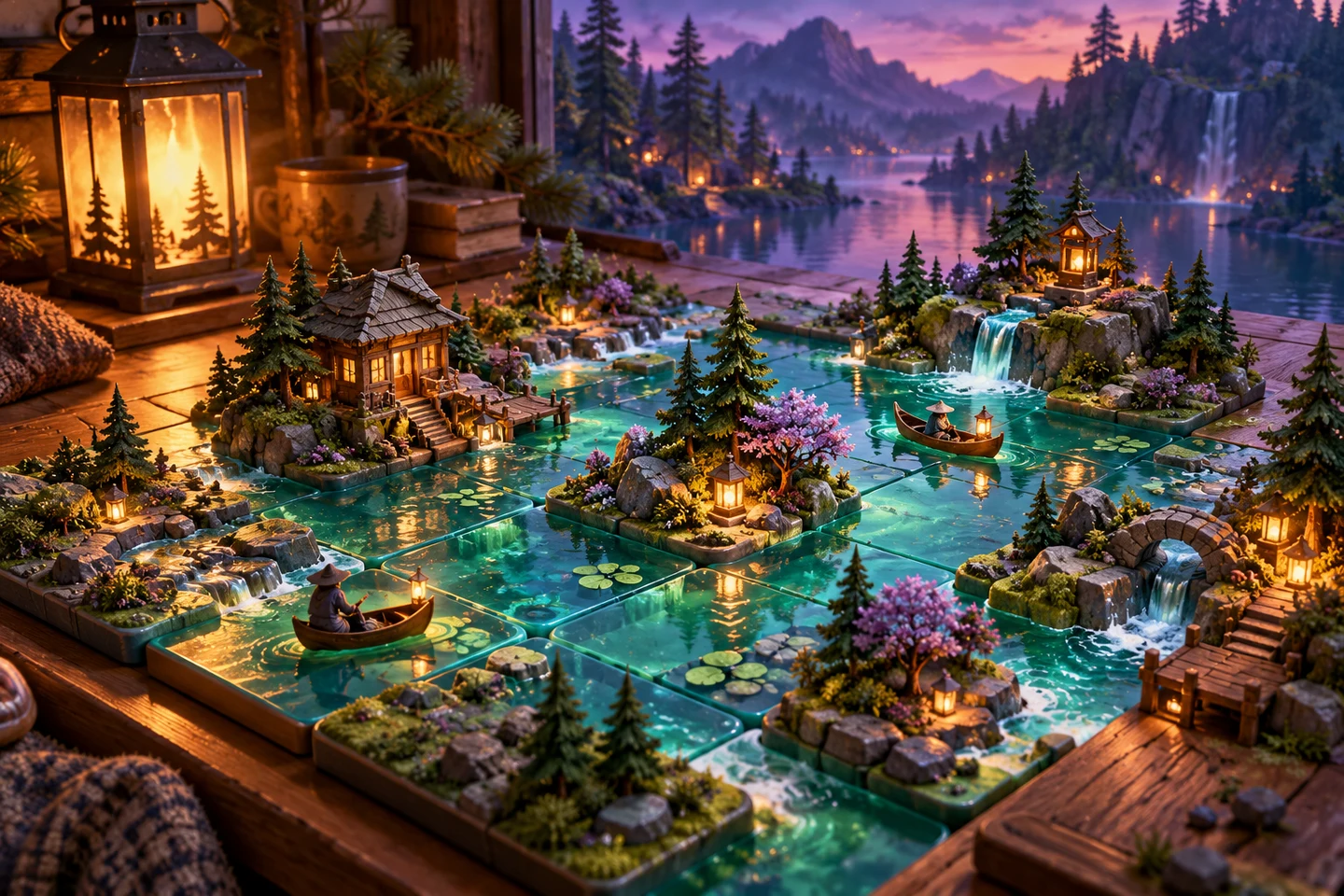
Pools.
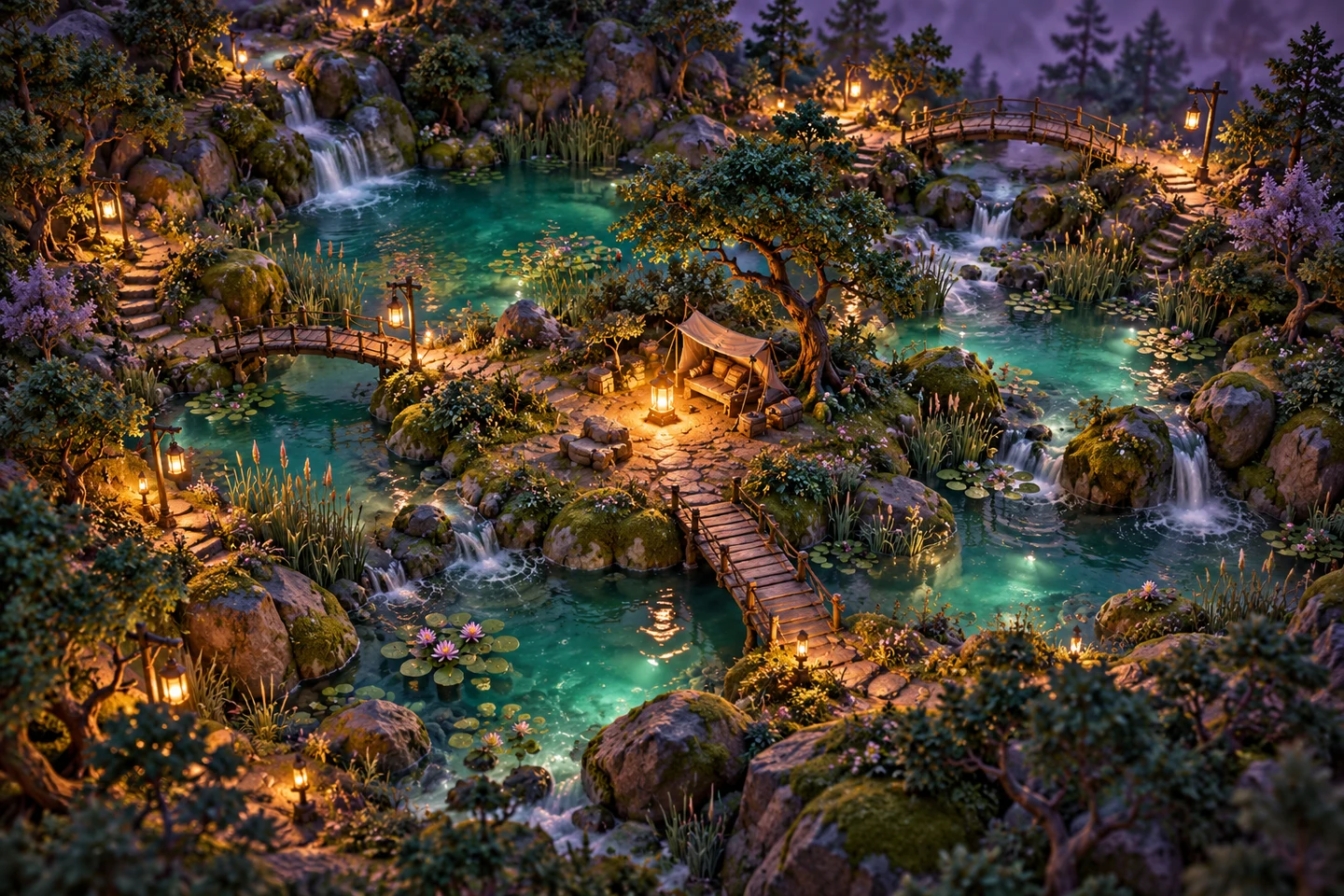
A camp in the middle.
A little lake taking shape around it.

01 / THE CENTRE OF THINGS
Every lake
begins with a camp.
The camp is fixed at B2. Channels, reeds and pools connect one edge at a time. Each piece asks a different question about its neighbours.
- 3 × 3
- shared spaces
- 3
- kinds of tile
- 8
- tabletop placements
Build a small evening.
A six-tile solo puzzle. Place both channels, both reeds and both pools; aim for 10 points. Every placement must share an edge with the camp or a tile already down.
This puzzle leaves two squares empty. The two-player tabletop game uses eight owned tiles and a separate score for each player. Refresh starts a new puzzle; no game state is sent to the server.
The important part
is where they meet.
A diagonal can look close. It is not a shared edge. Try the small scoring study to see the difference.
REED
A shared edge
makes the difference.
Tap any square to place or remove an example pool. Count only edges touching the reed.
Read the habitat.
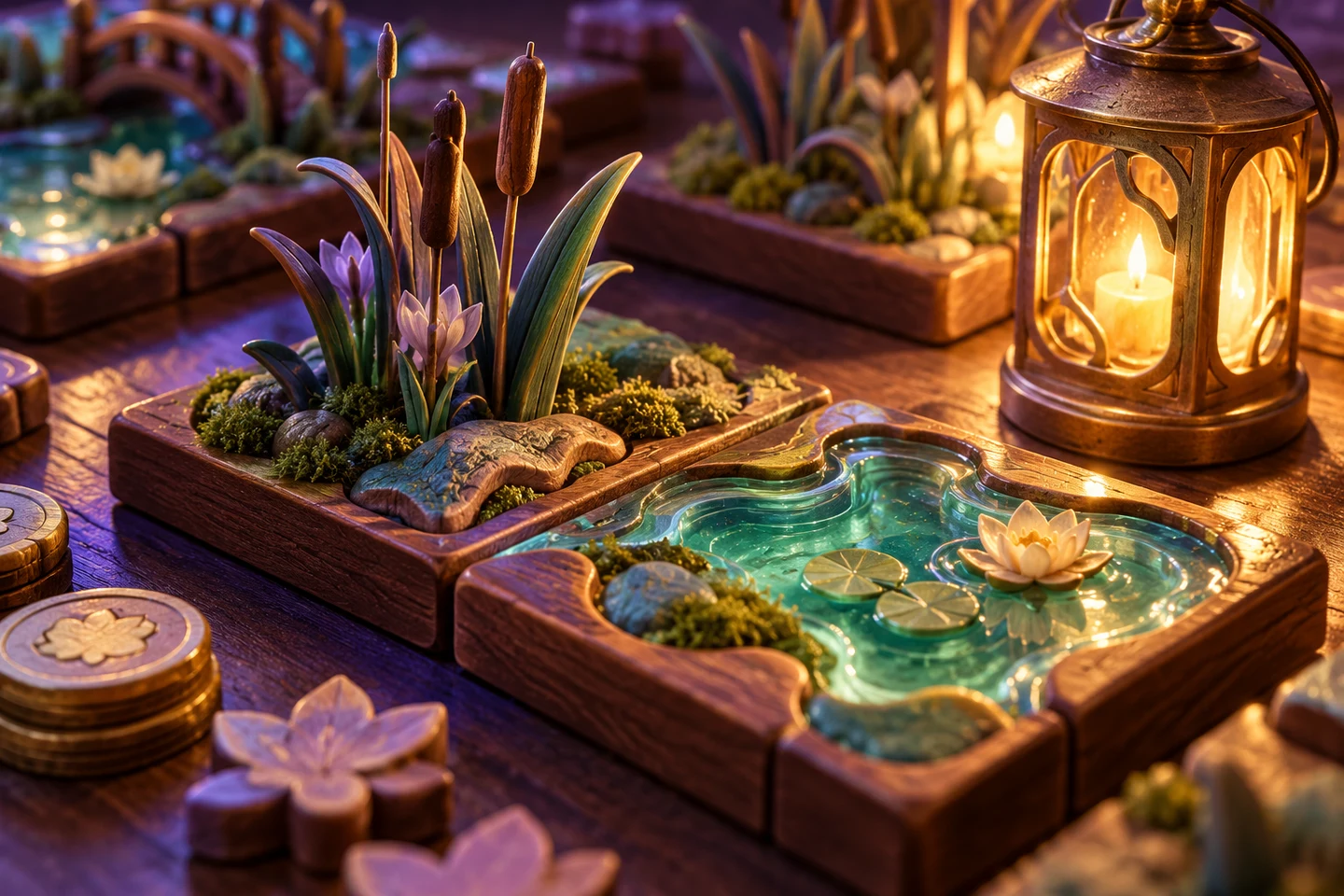
- Channel
- Worth 2 points when it shares an edge with the camp. Further away, it scores zero.
- Reed
- Worth 1 point for every pool sharing an edge with it. More than one pool can contribute.
- Pool
- Worth 2 points anywhere. It can also give a neighbouring reed something to count.

“Leave space
for the next idea.”
The guide brings the light. You decide how the lake unfolds. There is no timer and no need to hurry a good question.
Meet the idea behind the lake↗One lake.
Two points of view.
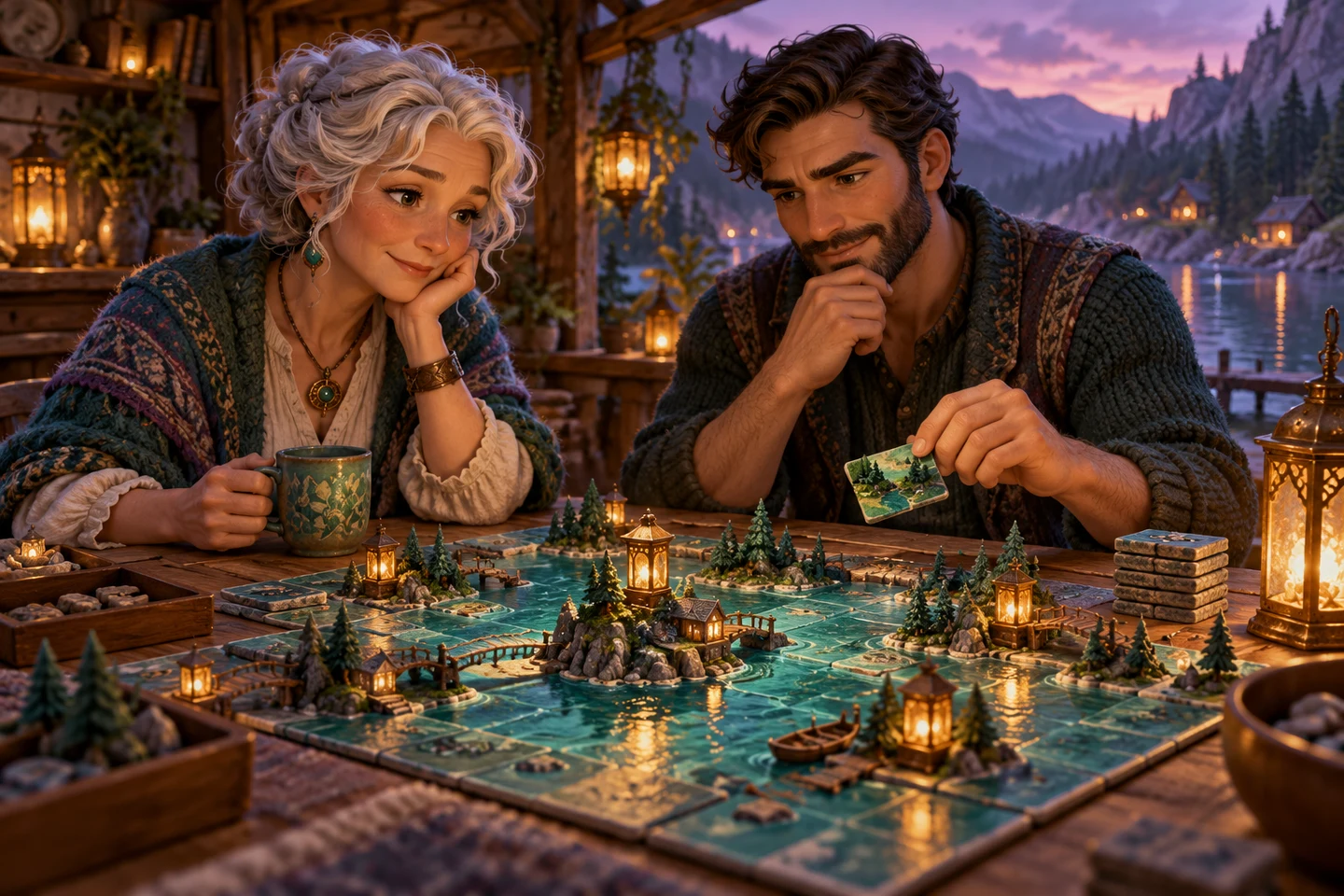
Both players can use the same pool as a neighbour. Ownership determines who scores the reed, not whose pool is beside it.
Check the shared scoring rules →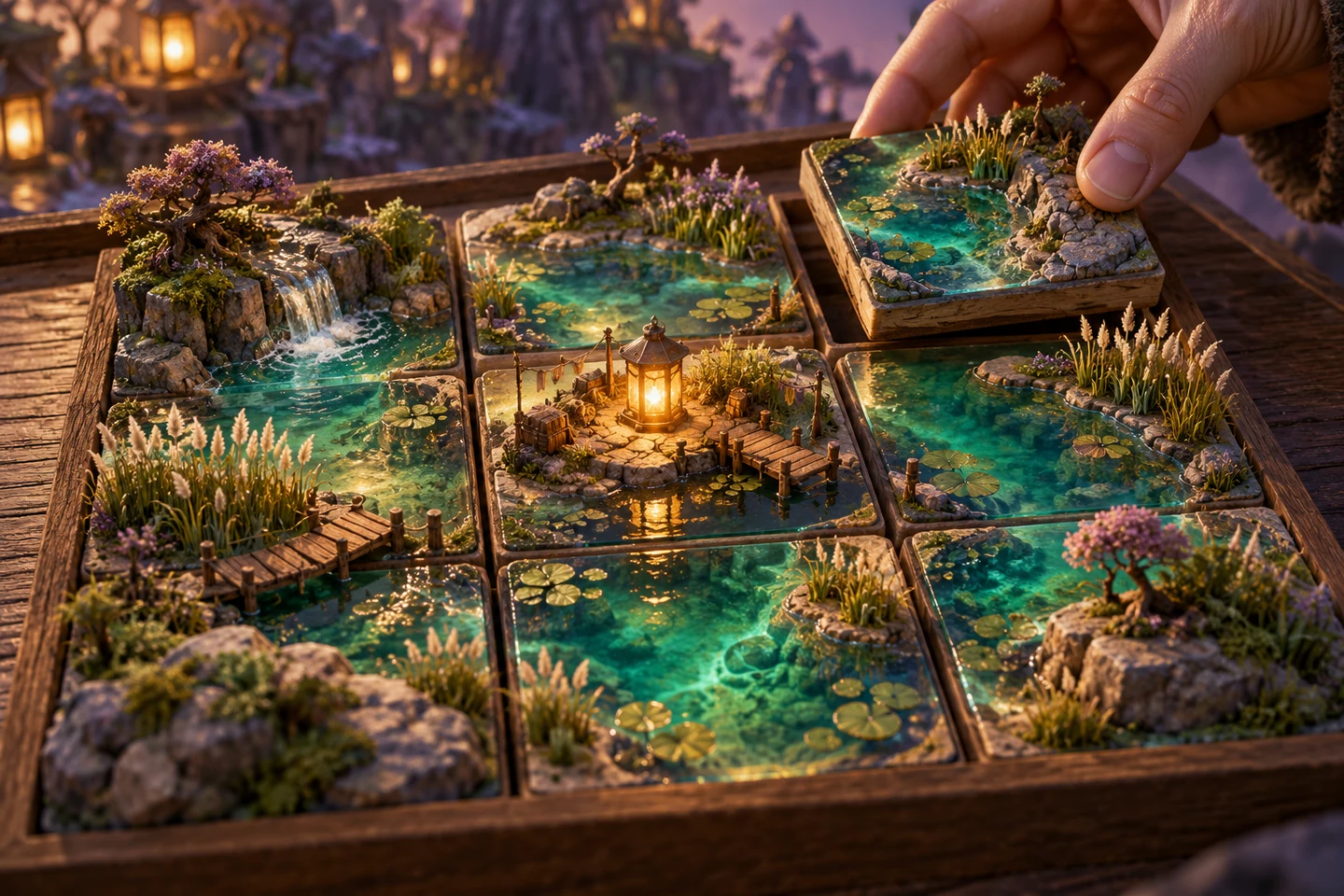
Choose.
Connect.
Leave it there.
- Choose from your supply.
Each tabletop player has two channels, one reed and one pool.
- Find an empty connected space.
It must share an edge with the camp or an earlier tile. Corners alone do not connect.
- Mark the owner and pass.
Tiles stay where placed. Alternate until all eight have joined the lake.
The lake keeps
a little of the light.
Open the scene for a closer look at the imaginary shore.
Paper squares.
Clear ownership.
A shared view.
A drawn grid and labelled pieces are enough. The rich illustrated world is an invitation to imagine, not a requirement to buy a set.
Lay out a readable table↗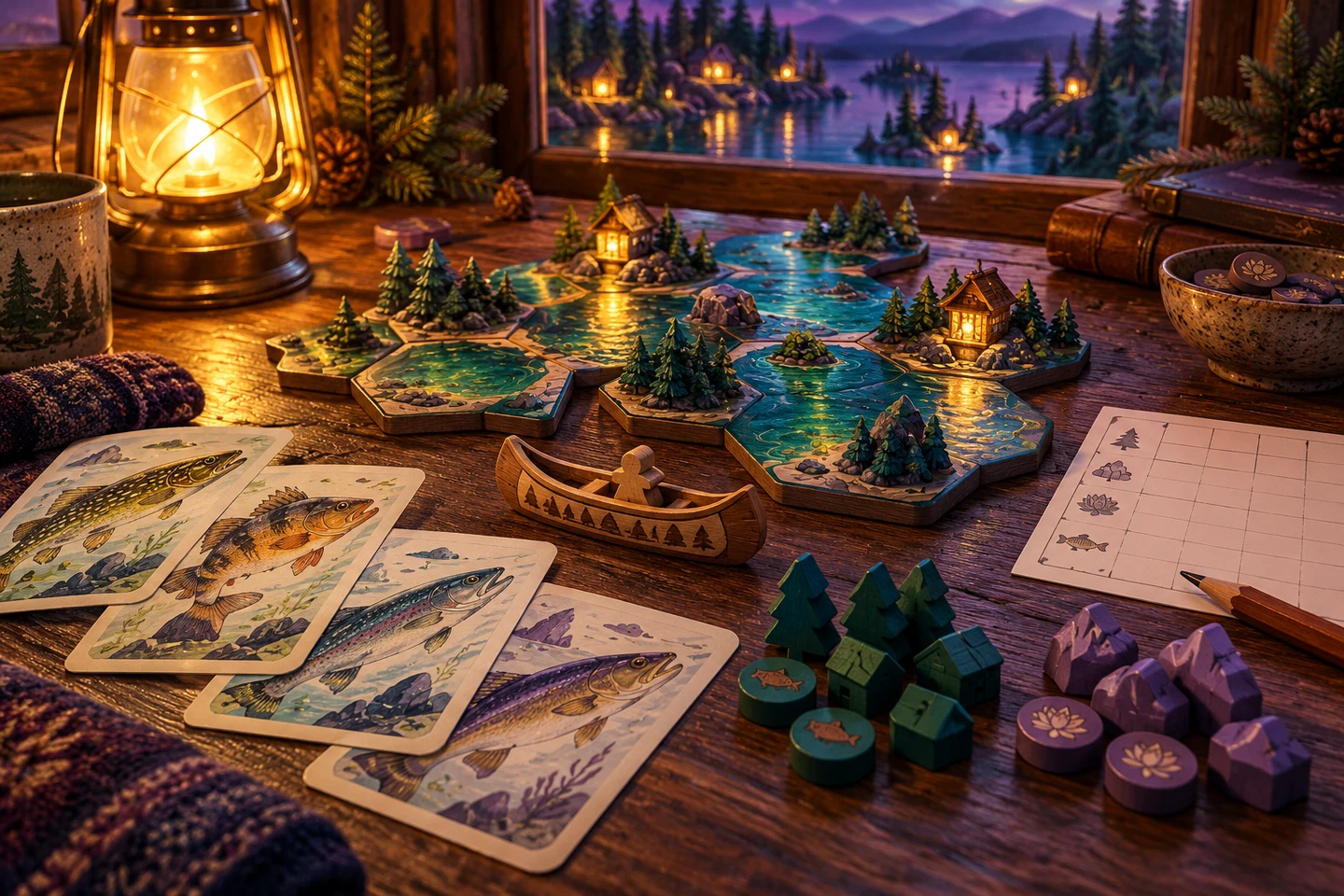
Keep the question
under the lantern.
Can a tile touch only at a corner?
No. Every new tile must share an edge with the camp or a tile already placed. Diagonals do not create legal connections or scoring neighbours.
Do I score as soon as I place?
The tabletop score is counted after all eight placements. The browser shows a live total to explain how neighbouring pools can change a reed’s value.
Who wins a tied game?
Compare the two final point totals. Equal scores share the result; there is no additional placement or tie-break.
 THE TABLE IS YOURS
Set the shore
before you start.
This host checklist stays locally. The live lake puzzle starts fresh when the page reloads.
Device-only checklist.Which square
needs more light?
A coordinate and a tile name can turn a vague question into a useful example. Send a private note about the rules or the puzzle.