What each piece
brings to the lake.
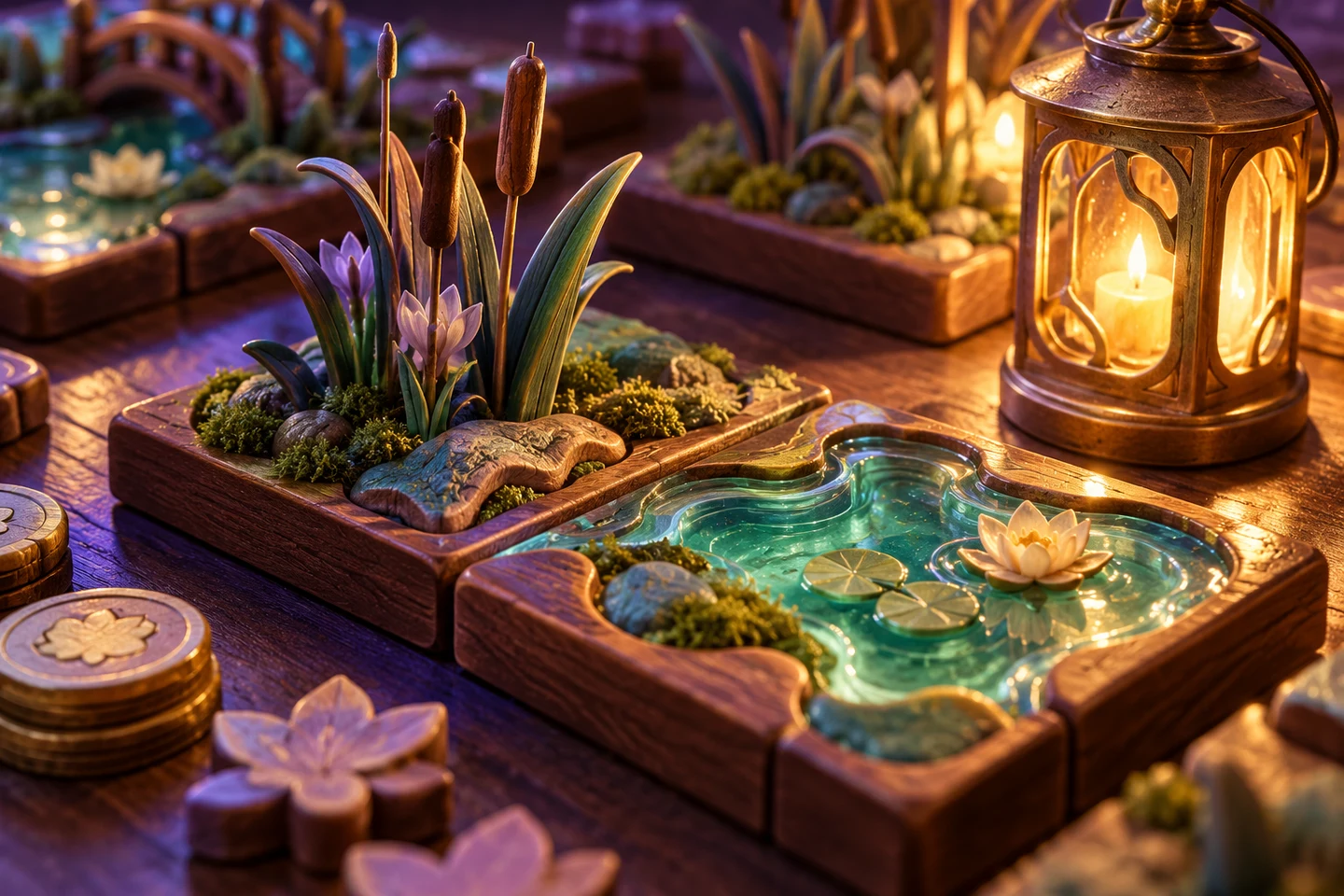
The living pieces
- 01Channel tile
- Scores 2 points only when it shares an edge with the centre camp. A diagonal does not count.
- 02Pool tile
- Scores 2 points wherever legally placed. It also gives an adjacent reed its edge bonus; the pool itself receives no extra point.
- 03Reed tile
- Scores 1 point for each orthogonally adjacent pool. A reed with two pool neighbours scores 2. Diagonal pools do not count.
- 04Camp tile
- Begins in the centre at B2. It is neutral, never moves and scores no points. The first placement must share an edge with it.
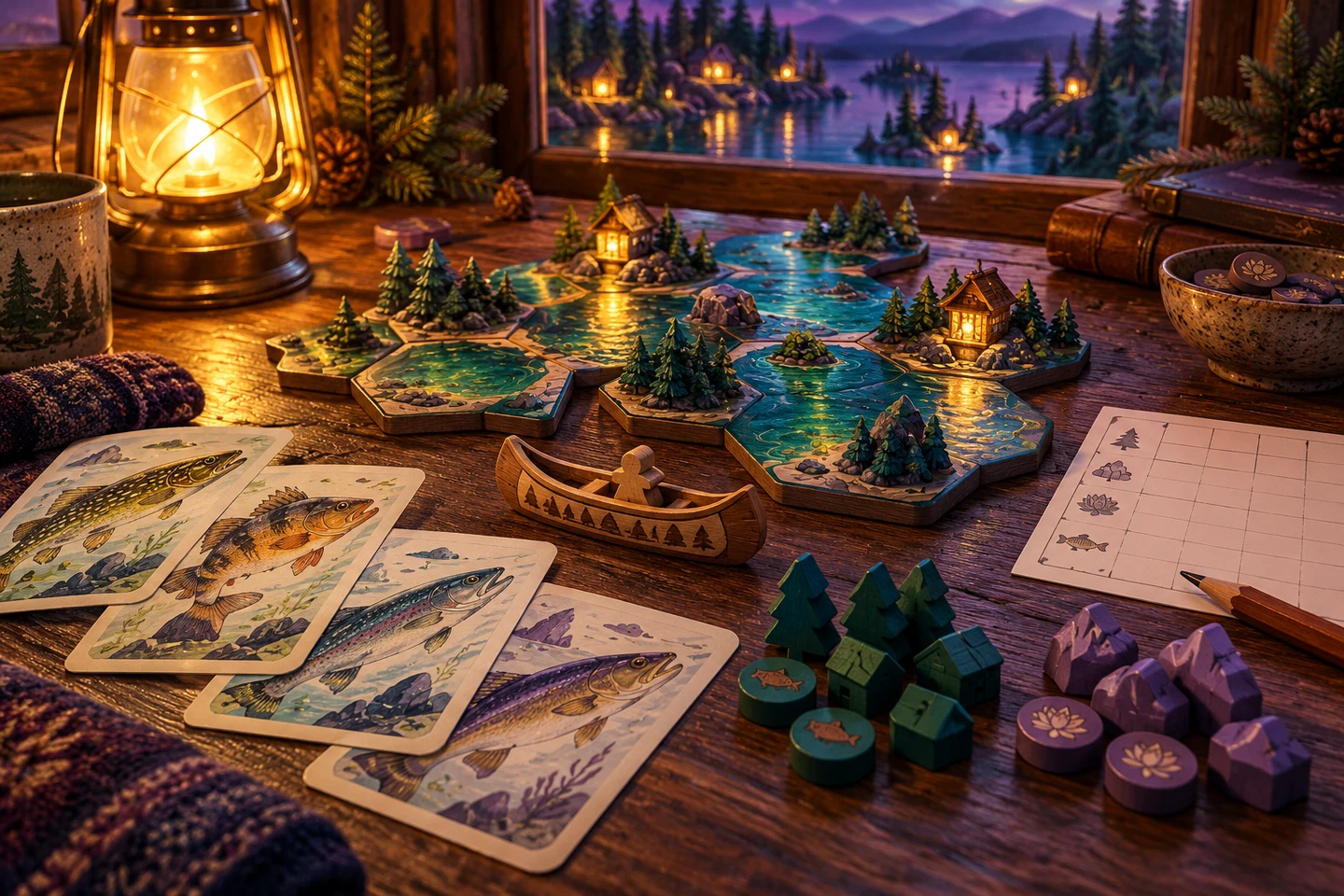
The shared table
- 05Ownership markers
- In the two-player game, mark each tile with its owner’s shape or initial. Neighbour bonuses can come from either player’s pool.
- 06Coordinate grid
- Use rows A–C and columns 1–3. Shared edges connect tiles; touching at a corner alone does not make a legal placement.
- 07Score sheet
- Count channel points, pool points and reed–pool edges at the end. Each player scores only their own tiles.
- 08Quiet-table reminder
- Read all scoring before the first placement. A practice arrangement can be discussed openly, then reset before a competitive game.
No entry contains those words. Clear the search to see every piece.
Pictures give it a place.
Words give it a rule.
Keep names, ownership and coordinates readable even when you improvise the artwork. The same definitions apply to simple paper tiles.
Follow a complete tabletop turn↗