Set the table
by the lantern.
Let both players see the same game: coordinates, ownership and the meaning of an edge.
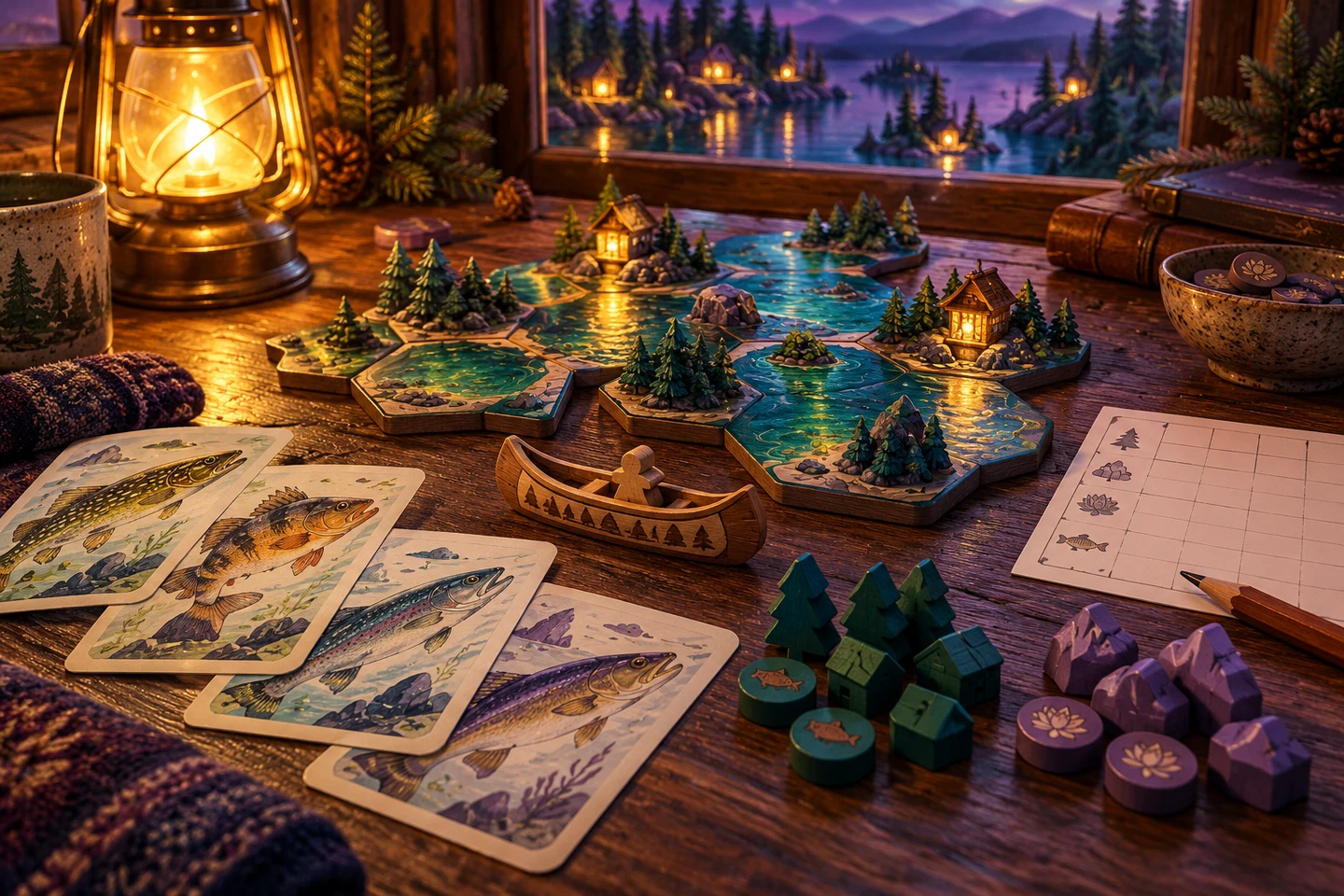
- 01
Draw the coordinates
Make a three-by-three grid with rows A, B and C and columns 1, 2 and 3. Put the camp at B2. Coordinates make a rules question easier to describe and reduce ambiguity about a placement.
- 02
Mark ownership clearly
Give each player a distinct shape or initial on their tiles. Colour can be an additional cue, but it should not be the only way to tell whose piece is whose.
- 03
Demonstrate shared edges
Place one pool beside a reed and count the edge. Move it diagonally and show that the bonus disappears. A channel beside the camp scores; the same channel in a corner does not.
- 04
Separate practice from play
Try a few placements openly, then clear the board and restore the exact starting supplies. Agree the starting player and let both people inspect all scoring rules before the competitive game begins.
- 05
Make room for a pause
There is no required timer. Give each person enough time to consider a placement and ask a rules question before committing. A shorter session or open cooperative practice is a reasonable house variation when agreed in advance.
The first placement can wait for a question.
Use an open demonstration before scoring a real game, then restore the empty board and both supplies.
Practise a connected placement↗